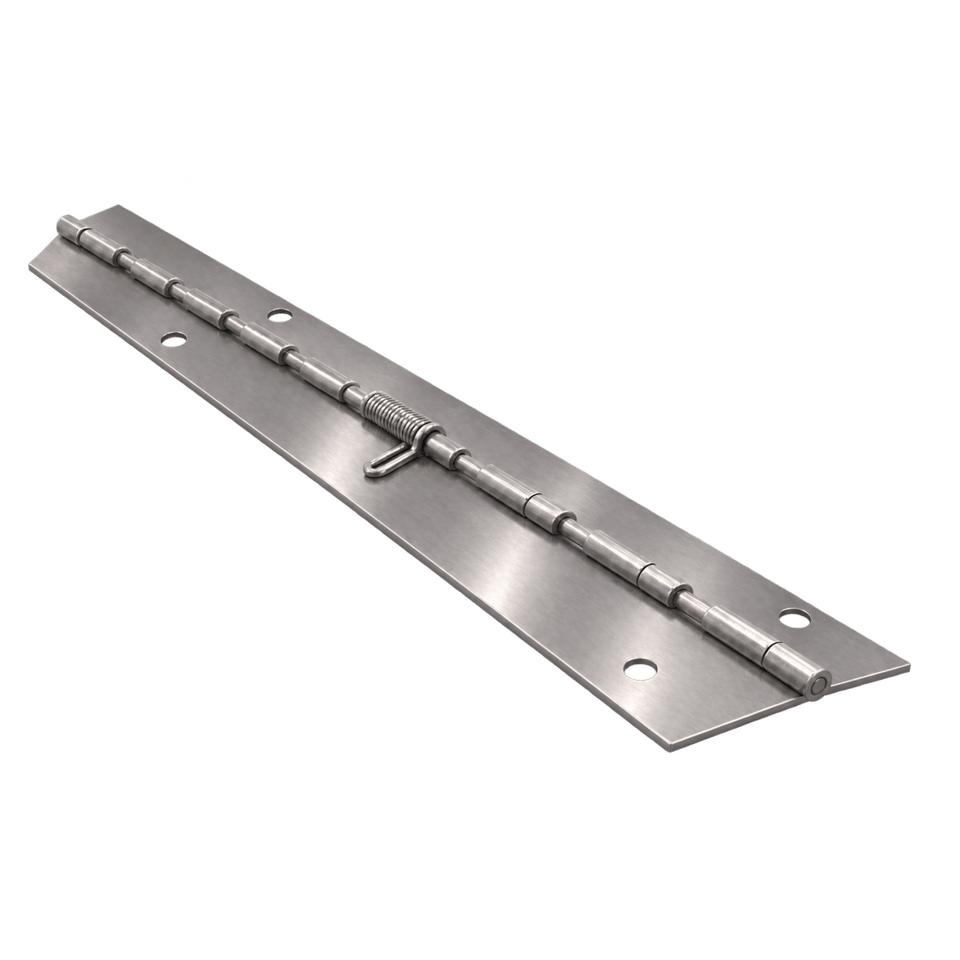
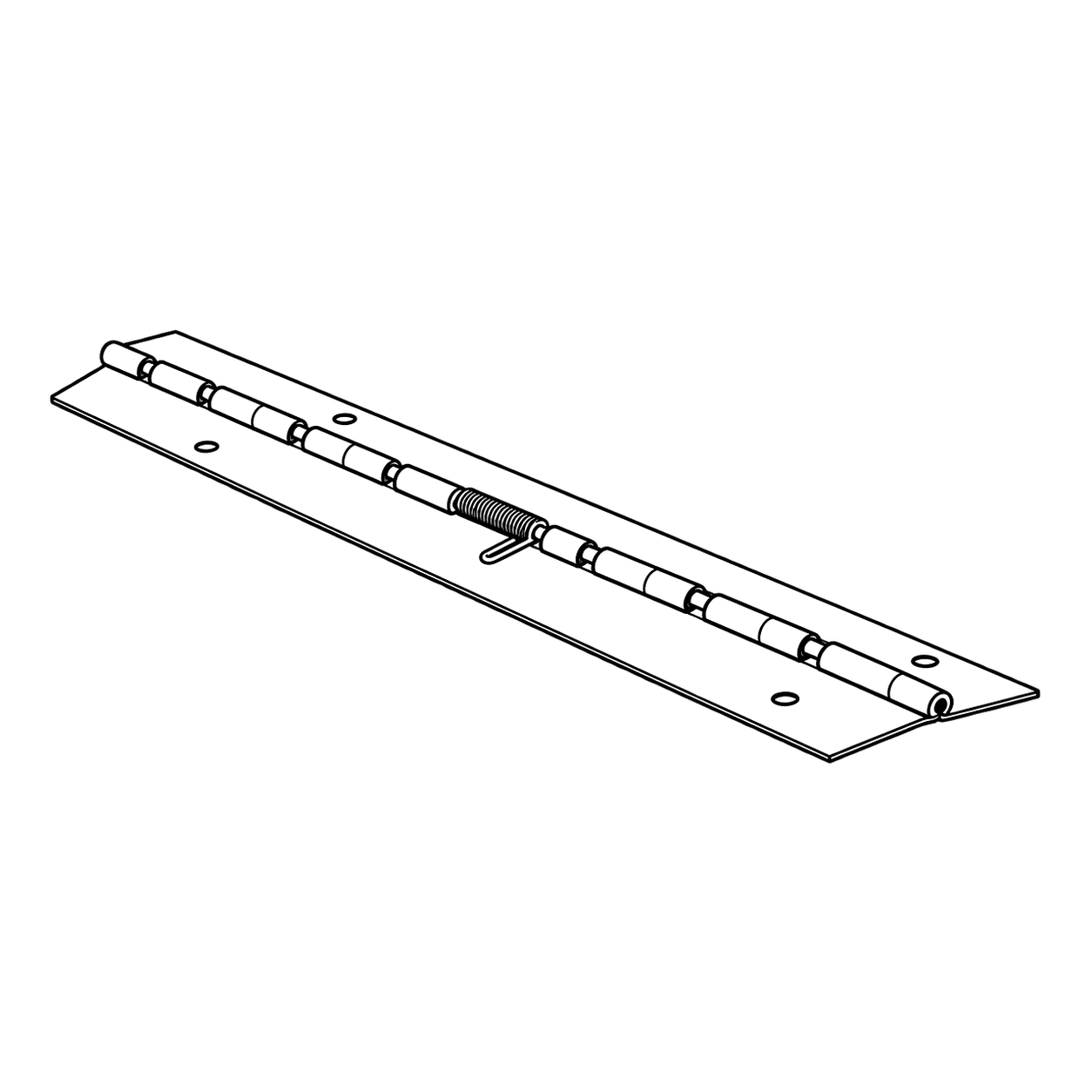
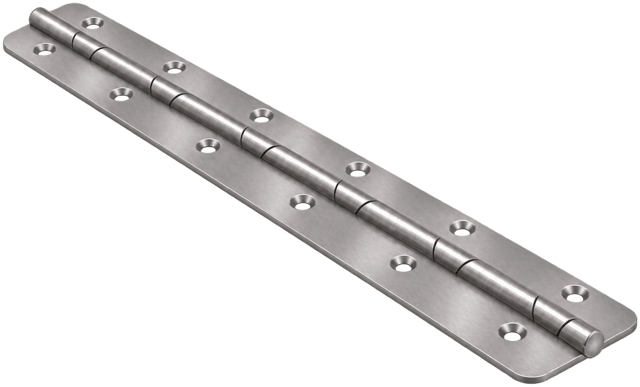
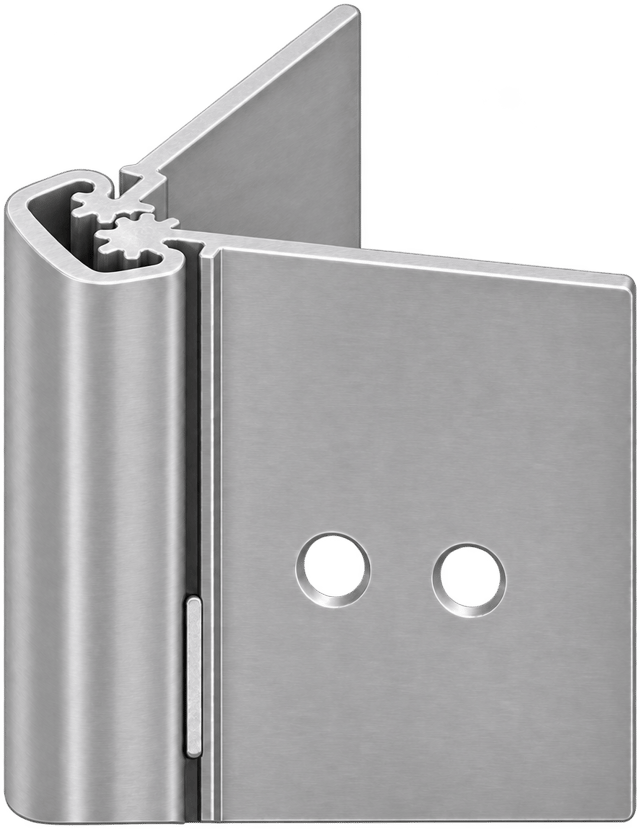
Harder Door Close. Continuous spring hinges close with more force than continuous cam, producing a harder door close.
Handing Is Fixed. The continuous spring hinge is handed, so the door orientation is set when the hinge is ordered. Changing the swing after ordering requires a different hinge.
Flat-Wall Hinging Exclusion. In a flat-hinge condition, the closed hinge is already rotated 90 degrees, so opening the door over-tightens the spring. Surface mount and vault are the hinges that work flat.
Hinge Length and Door Height. Continuous spring hinges have no listed size for doors from 68-1/2″ to 71″. The supported ranges are 57-1/2″ to 68″ and 71-1/2″ and taller. On doors taller than 71″, the hinge stops short of the door ends, changing the hinge line and the portion of the gap it covers.
Powder Coat Exclusion. Continuous spring hinges cannot be powder coated.
Closer Requirements. Continuous spring doors over 100 lb require an overhead closer. It needs a door at least 71″ tall, its top at least 80″ above the finished floor, and a headrail or transom to support its arm. A closer disables lift-over access.