
HIGH PRESSURE LAMINATE PARTITIONS
Design with High Pressure Laminate
High Pressure Laminate (HPL) balances design flexibility, durability, and value, making it a leading choice for commercial restroom partitions.
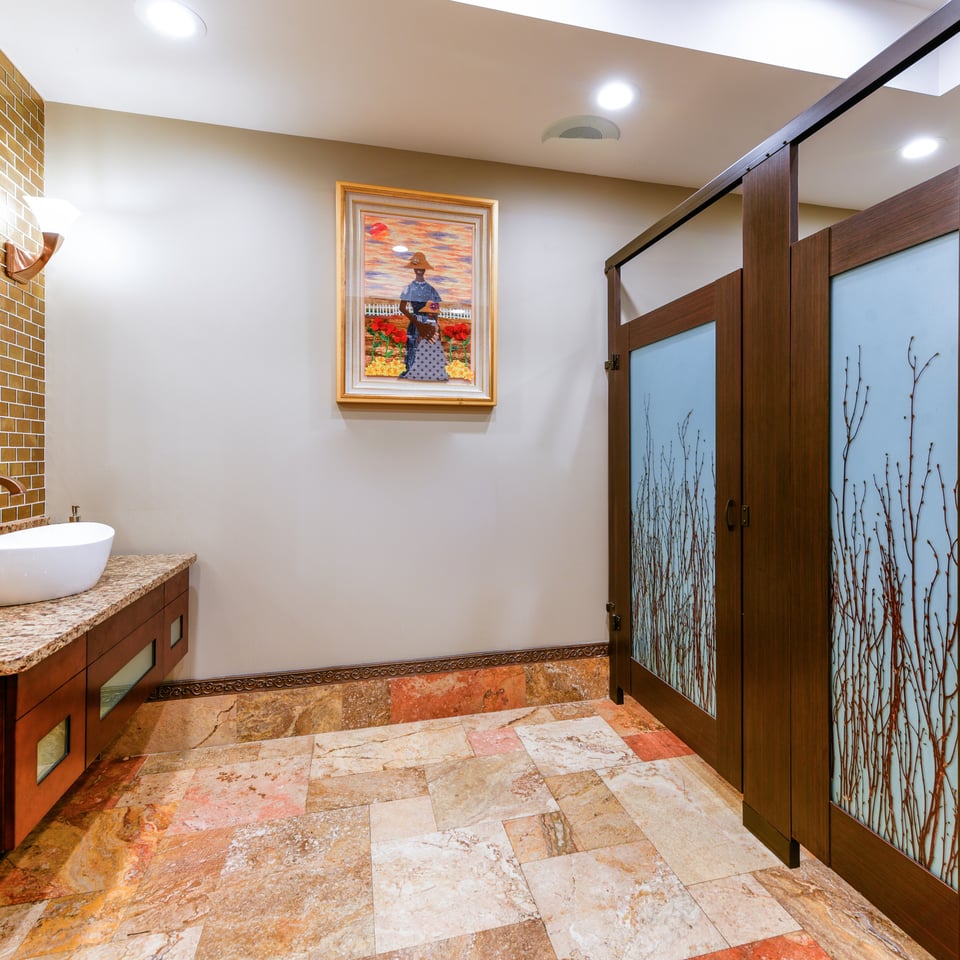
HIGH PRESSURE LAMINATE RESOURCES
Quick Access Hub
- View
- Open Charts
Color Charts
- View
Warranty Info
- Request
Request Samples
- Explore
Spec Builder
HIGH PRESSURE LAMINATE VENDOR NETWORK
Is Your Pattern Available in High Pressure Laminate?
We provide materials from many manufacturers and have an extensive selection of patterns and colors to select from. For additional options, contact us. We are happy to assist.









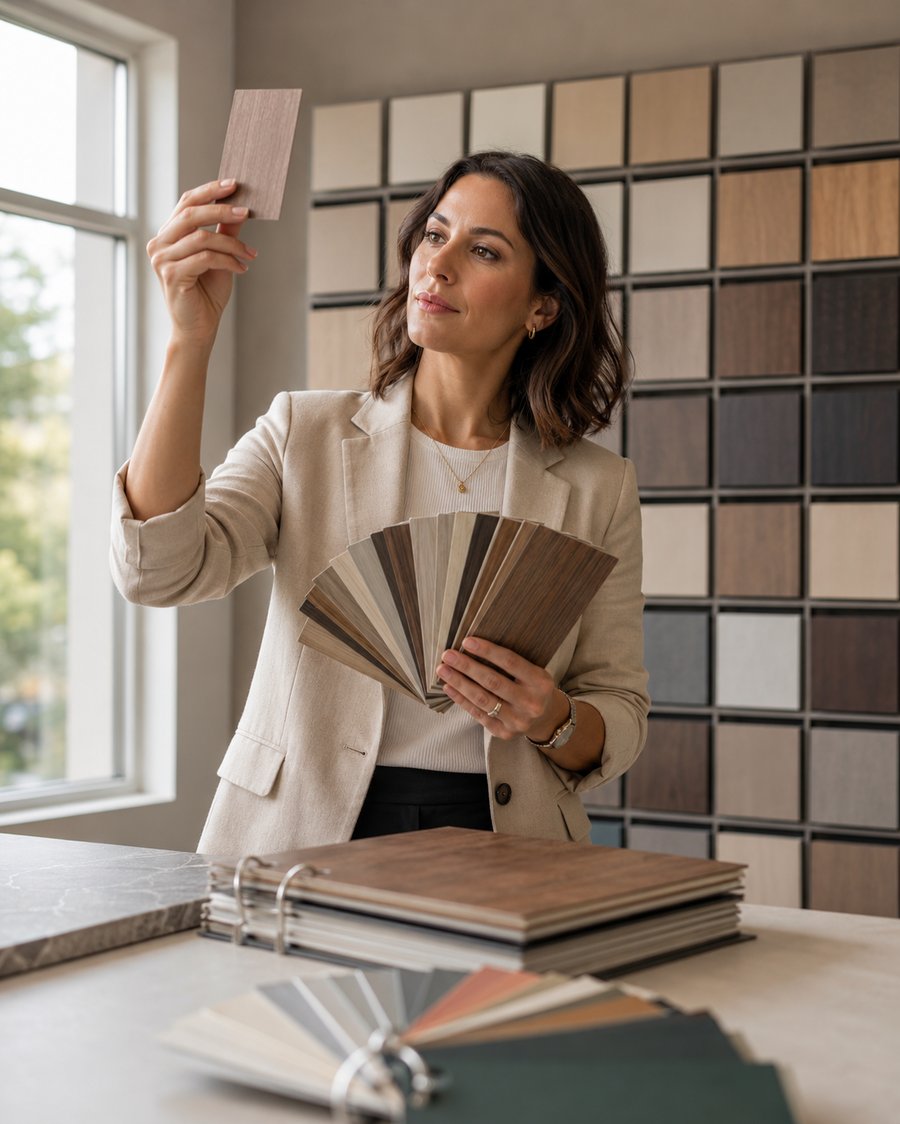
Have not picked a pattern yet?
Online
Browse the pattern library
We support most High Pressure Laminate options from our vendors. Browse the pattern library by color family, finish, and pattern style.
Project Types
Common Applications
HPL is specified where appearance, budget, and performance all play important roles.
Restaurants
Country Clubs
Offices
Wedding Venues
Hotels
Religious Buildings
Retail
Cultural Centers
Material Selection
Why Choose High Pressure Laminate
Most commercial restroom projects can successfully utilize High Pressure Laminate. Understanding both its strengths and considerations helps ensure appropriate material selection.
Strengths
High Pressure Laminate competes comfortably within budget-conscious commercial projects while offering greater design flexibility than many entry-level partition materials.
High Pressure Laminate is well suited for most commercial restrooms, including those that traditionally default to entry-level partition materials. Its combination of cost, appearance, and performance expands the range of materials worth considering.
High Pressure Laminate is available in an extensive range of solids, patterns, and woodgrains. These readily available options provide designers with substantial flexibility when selecting restroom finishes.
High Pressure Laminate has a long history of use throughout the commercial construction industry, including casework, lockers, and partitions. This history has established well-understood expectations for appearance and performance.
High Pressure Laminate's decorative surface helps maintain a consistent finished appearance over time. This makes it a common choice for projects where long-term appearance remains important.
High Pressure Laminate is available with custom colors, graphics, photography, and project-specific artwork. These capabilities expand design possibilities beyond standard laminate selections.
High Pressure Laminate supports project schedules through extensive material and finish availability. It also adapts well to changing schedules and budgets while maintaining design flexibility.
High Pressure Laminate supports project sustainability goals through managed wood fiber cores and low-emission materials. Available documentation and certifications support sustainability review and reporting requirements.
Considerations
HPL performs well in most commercial restroom applications, though moisture exposure remains an important consideration. Environments with elevated humidity, steam, or recurring water contact should be evaluated carefully during material selection.
HPL performs well in most commercial restroom applications. Environments that experience repeated abuse, vandalism, or high-impact use should be carefully considered during material selection.
Expected service life and renovation cycles influence material selection. Long-term ownership goals and project conditions should be considered when evaluating material options.
HPL is available in an extensive range of solids, patterns, and woodgrains. Availability, lead times, and costs may vary between laminate selections and should be considered during material selection.
When partition layouts extend beyond standard HPL component sizes, additional design solutions may be required. These solutions can influence the layout and appearance of the partition system and should be considered during design development.
Custom colors are available across solids, patterns, woodgrains, and select print-on-demand laminates. Performance, timelines, and costs vary by method and should be considered during material selection.
Custom HPL supports customer-supplied photography, artwork, and graphics, including imagery spanning multiple compartments. Artwork review and approval requirements may influence timelines and should be considered.
Material Basics
What is High Pressure Laminate?
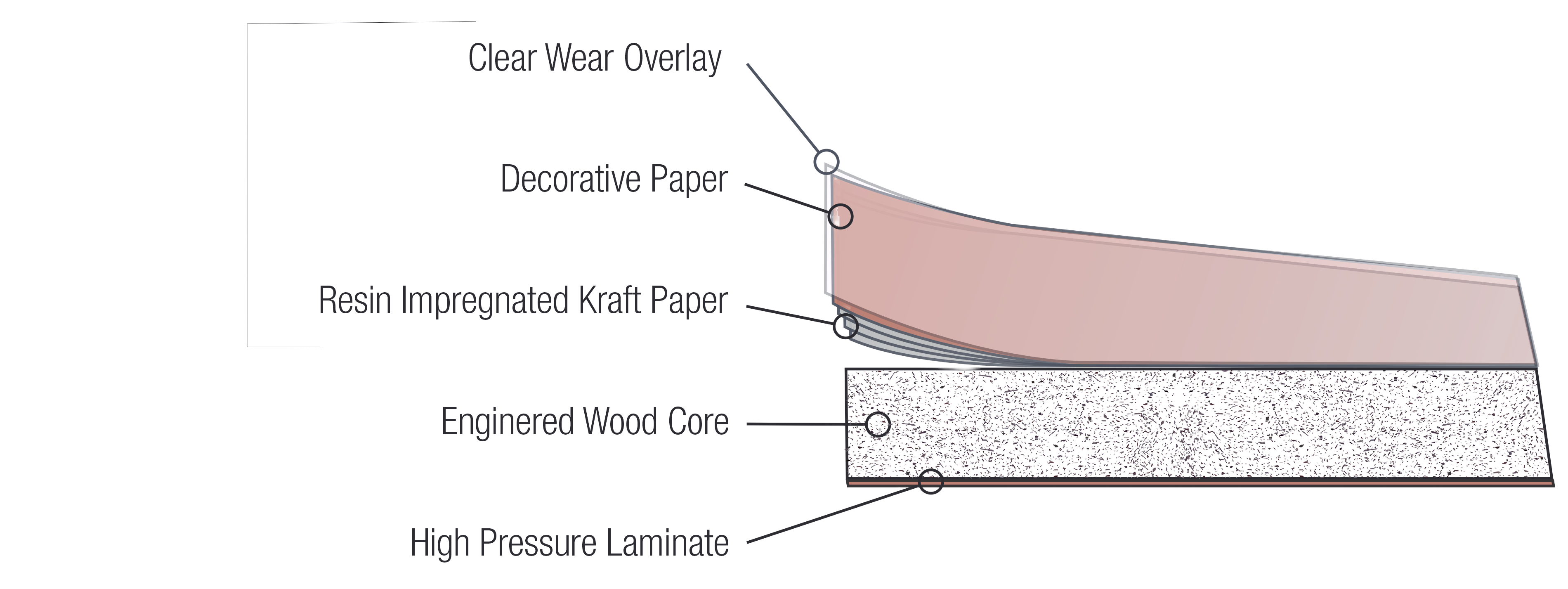
High Pressure Laminate provides surface performance and appearance, while the engineered core contributes thickness and dimensional stability. Together, they create a panel well suited for commercial environments.
Deeper Dive
High Pressure Laminate Insights
Materials and layers
Wood core, laminate surface
High Pressure Laminate toilet partition components consist of wood-based cores faced with 0.039″ horizontal postforming-grade laminate sheets bonded under heat and pressure using a PVA adhesive. Partition panels, pilasters, and slab doors are typically constructed with particle board cores, while stile-and-rail doors use engineered wood cores. The exposed surface includes a protective wear overlay that helps resist everyday wear while protecting the decorative layer beneath. This composite construction combines the structural support of the core with the appearance and durability of decorative laminate.
Wear, cleaning, and fire
Surface performance and maintenance
The exposed face of an HPL component is protected by a wear overlay that helps resist shallow scratches and everyday surface wear while preserving the decorative layer beneath. Because the laminate face itself is relatively thin, severe impacts can penetrate the surface and damage the underlying core.
Routine maintenance requires only mild soap and water or a non-abrasive cleaner. Abrasive cleaning products can damage the laminate surface and void the warranty. Optional antimicrobial treatments are available from certain laminate manufacturers for projects with enhanced hygiene requirements.
Standard HPL is manufactured with a Class B fire rating, while Class A material is available for projects requiring a higher level of fire performance.
Heights, widths, and grain direction
Plan the layout against the sheet
HPL component dimensions are governed by the size and orientation of the laminate sheets used in their construction. Available sheet sizes establish practical limits for component dimensions, while directional patterns introduce additional layout constraints.
Laminate sheets are manufactured in standard sizes, and directional patterns are typically produced with a vertical grain orientation. As a result, directional patterns can become a design constraint independent of sheet size, particularly when grain continuity must be maintained across doors, panels, and pilasters.
When a toilet partition component exceeds sheet-size or grain-direction limitations, layout adjustments such as additional components, transoms, or grain-orientation changes are typically evaluated first. Components may also be spliced to create larger assemblies, though seams are generally considered a last-resort solution because they may affect long-term component performance.
Texture and reflection
Surface character matters
Each laminate pattern is offered and sampled in a standard finish, though alternate finishes may also be available. Because texture and reflectivity influence the way light interacts with the surface, finish selection can substantially alter the appearance of the same laminate pattern.
Laminate manufacturers offer a range of finish options, from smooth matte surfaces to more pronounced textures. These finishes influence the visibility of scratches and fingerprints, the ease of cleaning, and the long-term appearance of the material in addition to its aesthetic qualities.
As a result, finish selection can be as important as pattern selection when evaluating the final appearance and performance of an HPL partition. Because alternate finishes are often produced as non-stock items and may require minimum order quantities, they can also affect project cost and lead time.
Certifications and indoor air quality
The details behind the label
Environmental attributes associated with HPL toilet partitions are typically tied to the individual materials used in their construction rather than the completed assembly. Low-emission laminate, adhesives, FSC-certified wood products, recycled content, and other sustainability characteristics vary by manufacturer, core material, and product selection.
Many HPL components may contribute toward project goals related to indoor air quality, responsible material sourcing, and sustainability programs. Because these attributes are material-specific, certifications and environmental claims should be confirmed for the specific materials intended for the final assembly early in the specification process rather than assumed across an entire product line.
Projects pursuing environmental objectives are often most successful when requirements are identified early in the design process. Aligning sustainability goals with material selection before specification helps avoid unnecessary substitutions, extended lead times, and rework later in the project.
The Process
How to Specify Ironwood
A complete Ironwood specification in three steps.
Open the Spec Builder
A few guided choices turn your design intent into an exact Ironwood model number.
Download Your Spec Package
A CSI spec, cut sheet, and technical data are generated instantly for your exact model.
Send It or Ask Us Anything
Call 360-568-1823 or email specs@ironwood-mfg.com. Our specialists walk projects end-to-end.
What You Walk Away With
- CSI Spec
- Cut Sheet
- Technical Data
Common questions about High Pressure Laminate

Cannot find the answer you are looking for? Our specialists are happy to walk projects end-to-end.
Contact Us- High Pressure Laminate can be confidently specified for most commercial restroom applications. It balances durability, appearance, and cost, making it a practical choice for offices, retail, hospitality, and many institutional facilities. Compact Laminate is typically reserved for environments exposed to sustained moisture, frequent abuse, or unusually demanding service conditions.
- No. High Pressure Laminate performs well in standard restroom environments but is not intended for direct water exposure or continuously wet conditions. Shower areas, steam rooms, and similar applications are better served by Compact Laminate, whose solid construction is more tolerant of sustained moisture.
- High Pressure Laminate partitions regularly remain in service for decades in appropriate commercial environments and are backed by Ironwood's 5-year limited warranty. Ultimately, service life depends on factors such as traffic levels, cleaning practices, moisture exposure, and the degree of day-to-day abuse experienced by the facility.
High Pressure Laminate performs well under routine commercial use and regular cleaning. Its durable decorative surface is designed to maintain its appearance in busy commercial environments and has a long track record of successful use in commercial restrooms.
Yes. Standard High Pressure Laminate is valued for its dense, non-porous surface, which resists the absorption of moisture and is easy to clean. Some manufacturers also offer enhanced antimicrobial treatments designed to inhibit microbial growth on the surface, though these should be viewed as a supplement to, not a replacement for, proper cleaning and maintenance practices.
Minor scratches and surface wear can often be addressed, with the success of the repair depending on the color, pattern, and severity of the damage. More significant damage is typically not repaired invisibly. Because partition systems are built from individual components, a damaged door, panel, or pilaster can often be replaced without replacing the entire restroom.
Maximum HPL door height is 108″, with panels and pilasters reaching 120″; where a taller opening is required, a transom above the door extends coverage to the ceiling.
Sustainability information is available for the laminate, core, adhesives, and other materials used in an HPL toilet partition system. Depending on the manufacturer and component, this information may include certifications, declarations, and other documentation used to evaluate environmental attributes against project requirements.
Yes. Custom appearances can be achieved through a variety of methods, with the best approach depending on the project's design goals. Options may include painted finishes, custom graphics, digital printing, inlaid elements, and other specialty treatments designed to achieve a specific visual result.
Gallery
Featured High Pressure Laminate Bathroom Stalls
View the partition configuration used in each featured project.
Louver · Headrail Braced
Door Lite · Headrail Braced
Door Lite · Headrail Braced
Louver · Headrail Braced
Flat Panel · Floor Mount
Explore Others
Looking for a different option?
Every partition material involves trade-offs. Compare moisture exposure, traffic levels, finish requirements, and budget considerations to determine the best fit for your project.
Compact Laminate CPL
Compact Laminate combines a decorative surface with solid phenolic construction for wet areas and demanding use.
Wood Veneer
Wood Veneer brings the grain, figure, and stain-matched finish of real hardwood to restroom partitions in interior, climate-controlled spaces.
Solid Surface
Solid Surface brings a non-porous surface that can be refinished in place to commercial restrooms where hygiene and long-term appearance matter.
Engineered Stone
Engineered Stone, often referred to as quartz, is a polished, non-porous material for panels and pilasters, typically paired with doors in another material.