
Hardware · Accessories

Closers

A closer controls a partition door's return to closed when its hinge cannot, or when the door is very heavy. It mounts to the door and anchors above the opening.

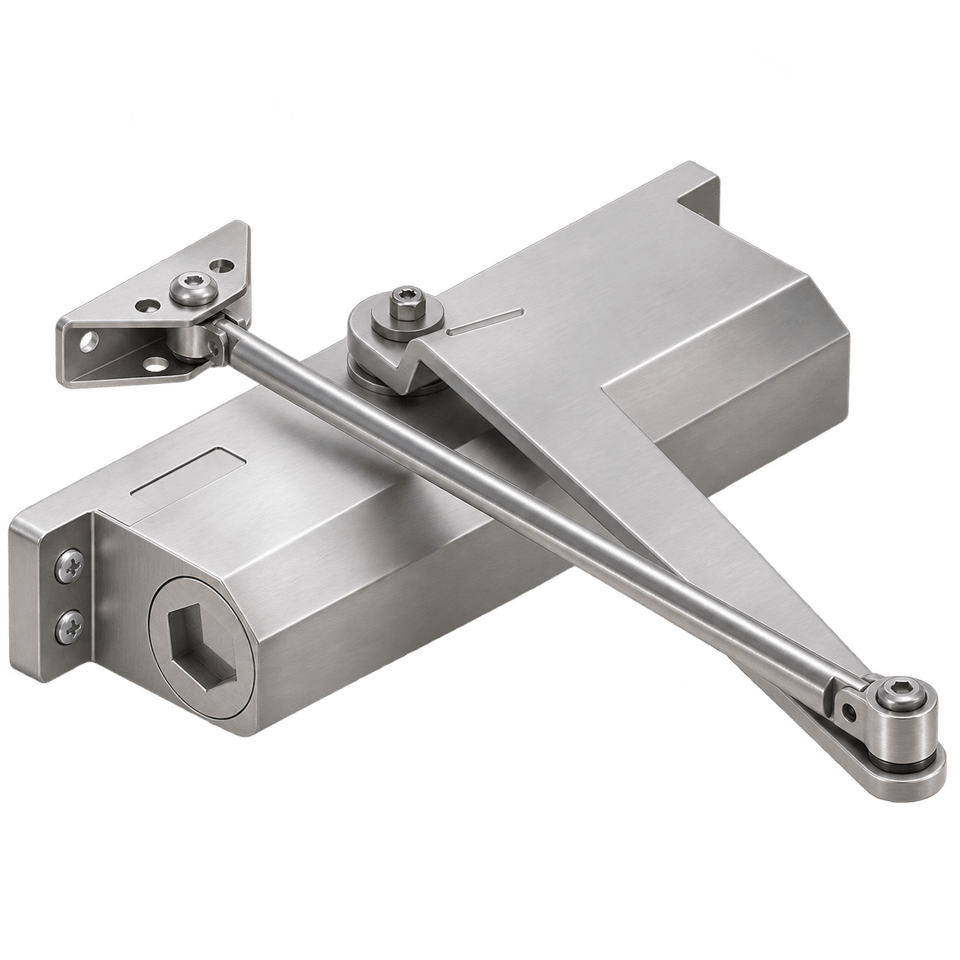
Brushed steel door closer assembly

Definition

What a Closer Does

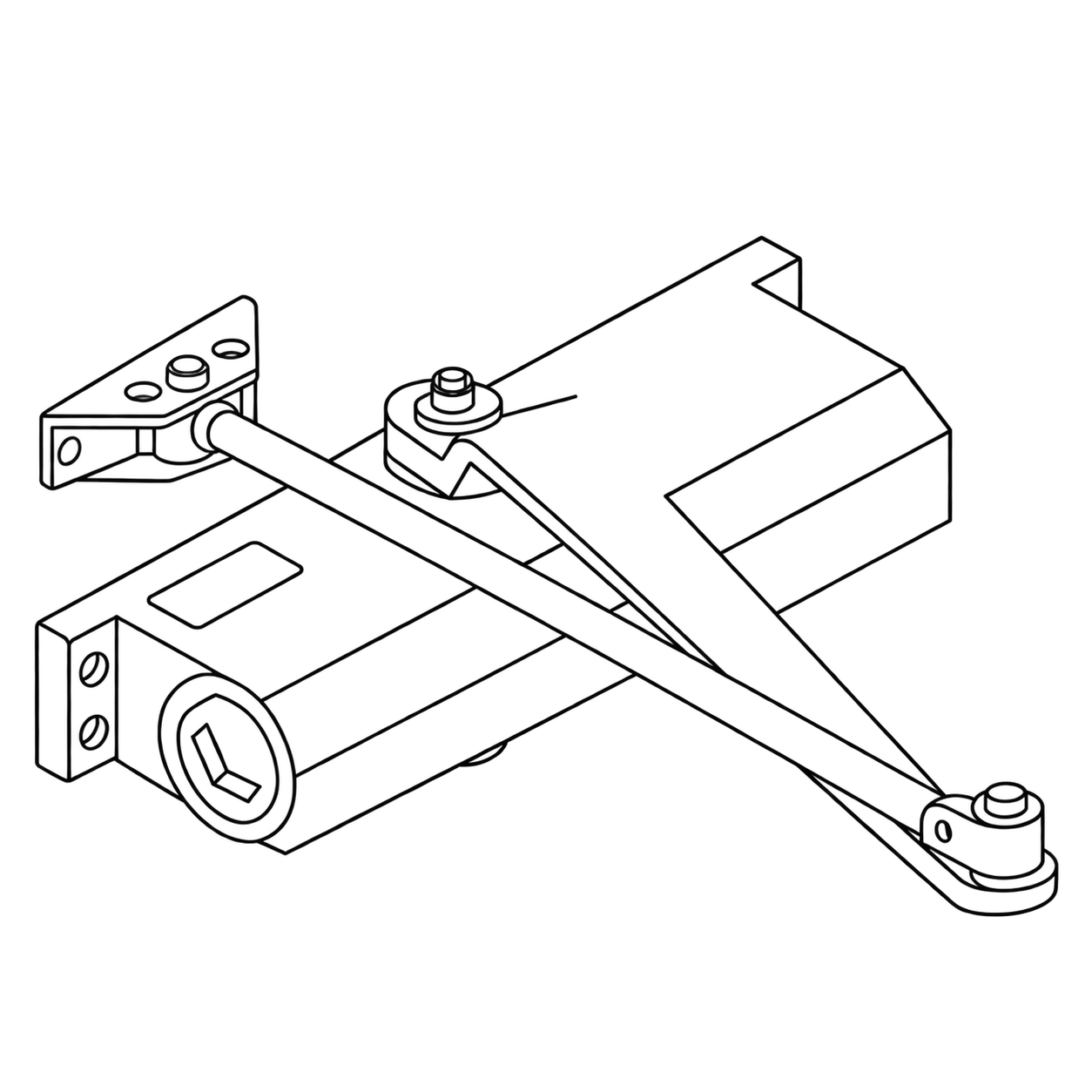
A closer controls a partition door's return to closed through an arm anchored on a headrail or transom above the opening. Hinge action and door weight determine when it is required. It can also be specified for its closing feel where the door height and mounting style allow it.

Line drawing of a door closer assembly

Compatibility

What Closers Work With

A closer fits every door material Ironwood manufactures and both door edge profiles.

Deeper Dive

The Technical Details

Closer FAQs

Team around a conference table, one person raising a hand to ask a question

Cannot find the answer you are looking for? Our specialists are happy to walk projects end-to-end.

Contact Us
  • A partition door requires a closer when its hinge has no closing action, as with continuous geared and non-spring concealed hinges, or when the door weighs over 100 lb. The exception is a 58″ Solid Surface door, which uses three surface mount hinges without a closer. An optional closer on a self-closing door still requires suitable door height and a headrail or transom.

  • Yes, where the partition door meets the closer's minimum 71″ height and 80″ TAFF and has a headrail or transom for anchorage. The gravity hinge's lift must be disabled, so lift-over emergency access is unavailable.

  • No. A closer requires a headrail or transom above the door. Standard Floor Mount permits neither, so it cannot carry a closer.

  • Yes. A closer overrides the hinge lift, so a door with a closer cannot be lifted over the keeper from outside. Emergency access then comes through the latch.

  • A closer on an accessible compartment door must take at least 5 seconds to move from 90 degrees open to 12 degrees from the latch, per Section 404.2.8.